
Hack, bug, 7 blockchains affected: Balancer breaks the silence
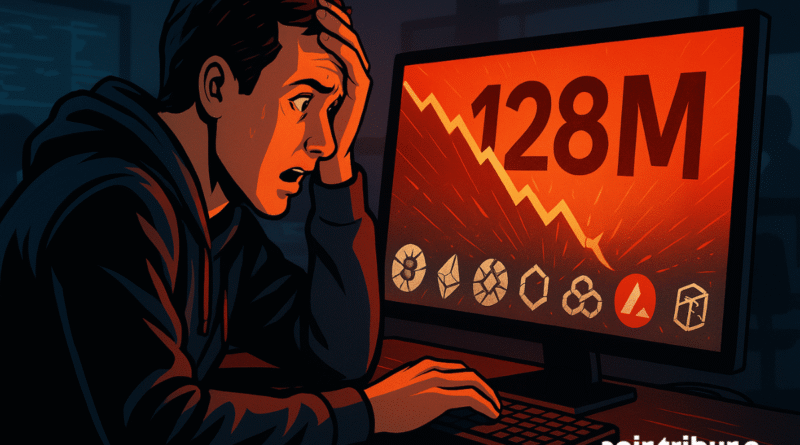
Balancer has just released its preliminary report on the attack that rocked the DeFi protocol on November 3rd. A technical flaw in V2 pools allowed hackers to siphon $128 million across seven different blockchains. However, the actual bill turned out to be much higher: the total value of locks (TVL) fell by 58% in just two days. How could a protocol audited eleven times fall victim to such a debacle?
In short
- Balancer lost $128 million on November 3 due to a rounding error in its V2 funds.
- The protocol’s TVL collapsed by 58%, from $443 million to $186 million in two days.
- Seven blockchains were affected, including Ethereum, which accounts for 99 million in losses.
- Ethical hacking teams have recovered $33 million so far.
A microscopic flaw with devastating consequences
On November 3, 2025, Balancer joins the very exclusive club of victims of massive DeFi protocol hacks. Culprit? Trivial rounding error hidden in “Foldable Stable Funds V2”.
This flaw gave attackers the ability to manipulate batch trades and methodically drain liquidity.
Ethereum suffered the biggest shock with the embezzlement of $99 million. The attackers then targeted Base, Polygon, Arbitrum, Optimism, Sonic and Avalanche. Their method? Play around with batch swaps to skew balance calculations and extract value before systems detect an anomaly.
Balancer’s reaction was swift. The team suspended the vulnerable pools within minutes of discovery. This intervention prevented the bleeding from worsening. V3 funds remained completely intact, which confirms the reliability of the new protocol infrastructure.
Recovery efforts are progressing. Ethical hackers have already repatriated $33 million. Berachain hard forked and recovered 12.8 million, with refunds already underway.
StakeWise managed to save 20 million thanks to its own operation. The protocol praised “the speed which made it possible to avoid more significant bleeding”. A full report will be released soon with recovery steps for affected users.
Collapse of trust costs more than a hack
TVL numbers tell an even starker story. The total locked value of the Balancer has literally collapsed. It grew from $443 million on November 3 to just $186 million today. A dizzying 58% drop in forty-eight hours.
This crash will erase months of relative stability. As of January 2025, Balancer was already losing ground, its TVL down by more than a billion. The hack simply accelerated this downward trend and spooked investors. The total loss now exceeds $257 million when theft and capital flight are added.
The BAL token fell 6% before stabilizing. Marketers quickly recognized the robustness of version 3 of the protocol. This price resilience, higher than that of TVL, demonstrates some market confidence in the Balancer’s ability to recover.
The protocol is now pushing an aggressive migration to V3. The team also warns of scam messages that take advantage of the post-hacking confusion. We promise deeper audits and code updates to prevent history from repeating itself.
This 128 million hack moves Balancer to second place on the unenviable podium of the biggest DeFi hacks of 2025. The ecosystem thus crosses the $2.2 billion mark in annual losses.
A stark reminder that DeFi, despite its promises of transparency and security, remains a minefield. Stacking, that fundamental principle that allows protocols to fit together like Lego, shows its downside here: when one link gives way, the entire chain wobbles.
Maximize your Cointribune experience with our “Read and Earn” program! Earn points for every article you read and get access to exclusive rewards. Register now and start reaping the benefits.

I am passionate about Bitcoin, I love exploring the intricacies of blockchain and cryptocurrency and sharing my discoveries with the community. My dream is to live in a world where privacy and financial freedom are guaranteed for everyone, and I firmly believe that Bitcoin is the tool that can make this possible.
DISCLAIMER OF LIABILITY
The comments and opinions expressed in this article are solely those of the author and should not be considered investment advice. Before making any investment decision, do your own research.